8/30/15
8/31/15
All About Nerve Cells
What controls our body, actions, and thought? Of course, we answer, "the brain". Yet, how much do we know about the brain, specifically the cells that basically let us control our bodies.
Nerve cells are a type of cell known as neurons. Their cell bodies range from 4 microns wide to 100 microns wide (a micron is 1/1000 of a millimeter). They are located throughout the body and the brain. Just in the brain alone there are about 100 billion nerve cells, and some run over a meter long throughout the body.
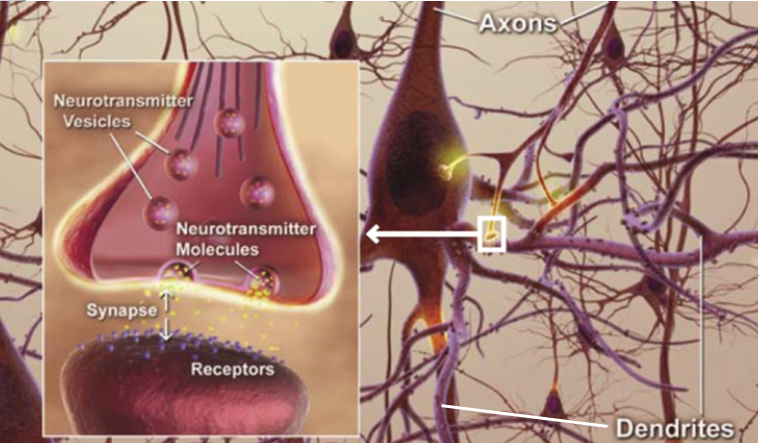
There are three basic parts to the neuron: the cell body, the axon, and the dendrites. The cell body contains the nucleus as well as the basic organelles needed to function such as a nucleus, mitochondria, cytoplasm, and other organelles. The axon is like a cable that carries electrochemical messages. The dendrites are nerve ending at the end of a cell and connect with other cells to relay information/ signals. A myelin sheath, a fatty substance, covers the axon to protect the body from the electrical signals being sent.
Neurons specialize in sending electrochemical signals throughout the body. A stimulus causes a signal to be transported from the cell membrane down to the axon, if the signal surpasses the action potential needed to start the reaction. This then causes potassium and sodium channels to open up as they being to carry the signal down the axon toward the terminal. The myelin sheath speeds up this process as well as stops the ions (K+ and Na+) from being exchanged with the outside environment. Once the signal reaches the end of the axon, the dendrites transfer the signal to the next cell membrane and the cycle continues.
These cells function throughout the body to carry out these tasks and are classified as nerve tissue. Based on the direction and the type of information that is sent, nerve cells can be classified into different categories. Sensory neurons send information from the sense (nose, eyes, ears, mouth, skin) to the central nervous system. Motor neurons, for example, send signals from the central nervous systems to the muscles and glands. Interneurons send signals between sensory and motor neurons.
Please see pages for works cited.
There are three basic parts to the neuron: the cell body, the axon, and the dendrites. The cell body contains the nucleus as well as the basic organelles needed to function such as a nucleus, mitochondria, cytoplasm, and other organelles. The axon is like a cable that carries electrochemical messages. The dendrites are nerve ending at the end of a cell and connect with other cells to relay information/ signals. A myelin sheath, a fatty substance, covers the axon to protect the body from the electrical signals being sent.
Neurons specialize in sending electrochemical signals throughout the body. A stimulus causes a signal to be transported from the cell membrane down to the axon, if the signal surpasses the action potential needed to start the reaction. This then causes potassium and sodium channels to open up as they being to carry the signal down the axon toward the terminal. The myelin sheath speeds up this process as well as stops the ions (K+ and Na+) from being exchanged with the outside environment. Once the signal reaches the end of the axon, the dendrites transfer the signal to the next cell membrane and the cycle continues.
These cells function throughout the body to carry out these tasks and are classified as nerve tissue. Based on the direction and the type of information that is sent, nerve cells can be classified into different categories. Sensory neurons send information from the sense (nose, eyes, ears, mouth, skin) to the central nervous system. Motor neurons, for example, send signals from the central nervous systems to the muscles and glands. Interneurons send signals between sensory and motor neurons.
Please see pages for works cited.